
How Technology is Quietly Improving Life at Home and Work
Technology that truly helps does not shout. It trims steps, lowers noise, and fades into the background while daily routines run smoother. The best examples today focus on comfort, clarity, and control – without asking for constant attention. Homes feel calmer, workdays feel lighter, and small decisions no longer drain energy.
Quiet progress shows up in dozens of places. Lights ease on at the right level. Desks change height without a fuss. Notifications land where they belong instead of everywhere at once. These are not headline moments. They are the dependable nudges that turn busy schedules into a rhythm people can keep.
Small Systems, Big Relief
Modern living benefits most from unglamorous wins – the ones that remove friction hour by hour.
-
Lights and shades coordinate with daylight so rooms stay bright enough to work and soft enough to relax.
-
Temperature holds steady in the rooms people actually use, not the empty ones.
-
Task lighting and screen backlights reduce eye strain and the neck tension that follows.
-
Water leak sensors transform late-night surprises into quick fixes.
-
Presence cues start fans and purifiers immediately, then power down to keep sound levels civil.
Each improvement is modest on its own. Together they free attention for better work and better rest.
Workdays That Flow, Not Fray
Focus is a finite resource. Tools that respect it make a visible difference. Video calls now suppress background clatter and frame faces so meetings run without constant adjustment. Shared canvases enable quick sketches to become action items, while version control prevents duplicate effort that wastes time.
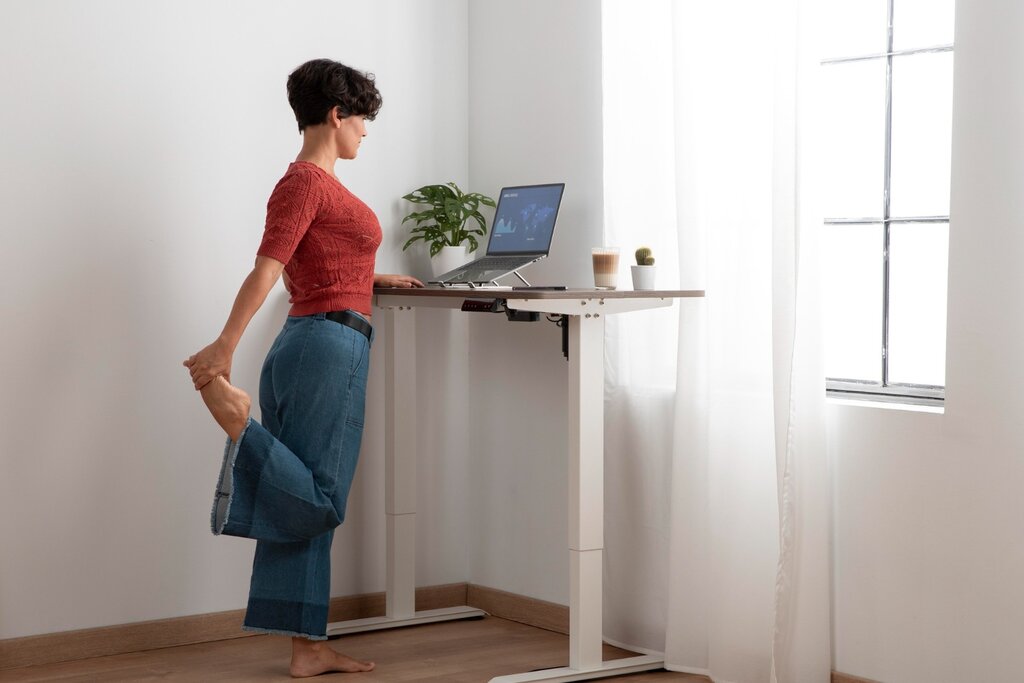
Posture variety matters as much as software polish. Sit for deep typing. Stand for triage and review. Walk during low stakes calls. Healthy switches are easier when the environment responds in a single tap. Scene based controls – part of practical home automation – can raise a work surface, bring task lights to a clear level, and mute living room screens in seconds. When movement and light align with the task, stamina lasts longer and late day quality stays high.
Teams benefit from rhythm, not more rules. Short written updates carry status, so live sessions focus on decisions. Collaboration platforms respect quiet hours by default, which stops the midnight drift that steals sleep: fewer pings, stronger output.
Design That Respects Attention
Comfort is not a luxury. It is the baseline for steady performance at home and at work. Desks and chairs should fit the body – elbows near a right angle, screen tops near eye level, feet fully supported. Cable routing and small storage clear the edges so posture changes stay easy. Materials finish the picture. Matte surfaces hide glare, open-pore woods add warmth, and durable fabrics keep rooms looking composed after long weeks.
Light is the quiet hero. Desks sit perpendicular to windows so daylight helps without glare. Sheer shades soften noon brightness. In the evening, warm neutral bulbs around 3000 to 3500 K keep clarity without harshness. A small backlight behind a monitor lowers contrast and relaxes the face. Add a touch of acoustic treatment – rugs, lined curtains, book spines with mixed depth – and conversations sound natural instead of echoing around hard walls.
Privacy, Safety, and Control Without Noise
Good systems are predictable and kind. They do not harvest more data than they need. They run core logic locally when possible for speed and privacy, and they make cloud features optional. Clear indicators show what is on, what is learning, and how to pause. Manual overrides work even when power blinks or the internet drops.
Safety belongs in design, not in a disclaimer. Motion profiles start soft and stop clean to protect hands and hardware. Doors and shades fail safe rather than fail shut. Alerts are specific – which room, what threshold, what action to take – and respect quiet hours unless a true risk appears. A home or office that behaves this way feels trustworthy day after day.
Hybrid Spaces That Reset Fast
Rooms carry more roles now – office, studio, gym, classroom – often in the same footprint. The winning tactic is not to add volume. It is to make pieces that change height and light in seconds. A surface rises for sketching, lowers for typing, and clears for family time. Task lights pivot to frame a call, then soften for reading. Shades track the sun during work blocks and open wide after hours to widen the view.
Reset speed determines whether a routine sticks. When cords vanish into clean routes and each tool has a marked home, the room invites a quick tidy and a smooth shift to the next use. The result feels like more square footage, not more clutter.
A Quieter Upgrade Path
Technology that improves life does simple work with quiet confidence. It senses the right moment to help, makes one clear move, then gets out of the way. Lights, climate, and motion serve human rhythms – not the other way around. Work benefits from fewer interruptions and better posture. Evenings benefit from calm scenes that lead toward rest.
The next steps are practical. Add systems that reduce steps. Prefer local control with honest privacy. Shape motion so it feels safe. Keep one wall button for daily scenes and one small widget for quick checks. When choices follow those lines, homes and workplaces behave like steady partners – present enough to help, quiet enough to forget, and ready for tomorrow without extra effort.
No posts found
Write a review© 2004 - 2026 Tech Source Canada. Prices and availability are subject to change without notice. Tech Source Canada is not responsible for typographical errors or omissions. Product images are for presentation only, they may not be exactly as show. Price listed may be an online only price. All trademarks & logos are properties of their respective owners. SEO by Dazai Digital. Website hosted by Mister Webber.